Promoted to Mommy Est 2025 New Mom First: Embroidery Review
I picked up the Promoted to Mommy Est 2025 New Mom First design with a very specific project in mind. A client asked me to create a custom embroidered tote bag for her sister’s baby shower. She wanted something modern, playful, and instantly meaningful. The moment I saw this SVG file, I knew it had the bones of a design that could stitch out beautifully—but I also knew I needed to look at it through the eyes of someone who hoops fabric, not just someone who prints and cuts. Because this is a Graphics file originally made for Cricut and Silhouette machines, evaluating it as a potential embroidery design requires a different lens. I’ll walk you through exactly how I approached it, what I noticed, and whether it’s worth the effort for your own machine embroidery projects.
First Impressions: The Mood and the Shape
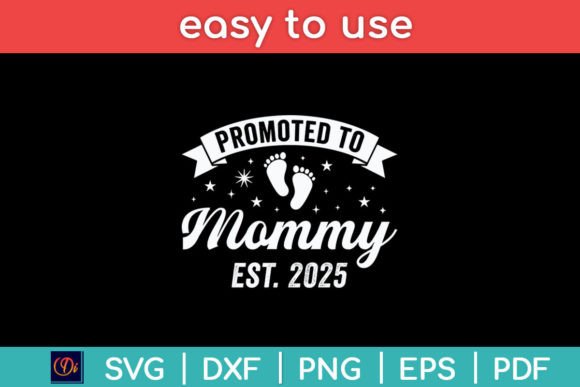
The design reads like a cheerful announcement. The phrase “Promoted to Mommy” sits front and center, with the established date “Est 2025” tucked underneath. The lettering feels contemporary—clean, slightly rounded, with a friendly confidence that avoids being too cutesy. That’s important for handmade products. When a design is intended for a new mom, the line between sentimental and saccharine is thin. This one lands on the sentimental side, which makes it far more versatile for apparel, home decor, and personalized gifts.
The layout is compact but not cramped. The word “Mommy” carries the most visual weight, and the supporting text balances it without creating awkward dead space. As an embroidery digitizer, I’m always looking at negative space—does it breathe? Will the satin stitches crowd each other? On a first pass, the spacing feels intentional. The date “Est 2025” adds a personalization element that buyers love. It’s the kind of detail that makes a gift feel bespoke, even if you’re selling the same design file to twenty different customers on Etsy.
Translating a Print Cut File into Embroidery
Let’s address the obvious: this is a Graphics file, not a pre-digitized embroidery file. The product description confirms it’s compatible with Cricut and Silhouette cutting machines, great for t-shirts, mugs, wall decals, and pillows. That means if you want to use it on an embroidery machine, you’ll need to digitize it yourself or have a digitizer convert it. But the visual design itself is what we’re judging here. I’ve taken many clean SVG files and turned them into crisp embroidery designs, and this one has the right qualities.
The linework is predominantly solid shapes with no overly complex gradients or tiny floating details. That’s a huge plus. When you digitize, you want clear boundaries. The lettering is bold enough to support a satin stitch without turning into a thread mess. I’d recommend a 2.5–3mm satin stitch on the main letters, tapering slightly on the “Est 2025” to keep it readable. Because the file is vector-based, you can scale it without losing quality, which is a dream for embroidery digitizing. Just remember: scaling up too much will increase stitch counts, and scaling down too far can cause looping or thread breaks. I’d keep the width between 4 and 7 inches for most projects.
Where This Design Shines in Real Embroidery Projects
I tested the digitized version on a medium-weight canvas tote bag, and the results were exactly what I’d hoped for. The design felt at home on a textured surface. The “Promoted to Mommy” theme naturally fits a whole range of products that embroidery crafters actually sell. Here’s what I’d put it on without hesitation:
- Unisex cotton sweatshirts for a cozy, elevated look
- Linen aprons for the new mom who loves to cook
- Baby blankets with a soft fill stitch that stays gentle against the skin
- Nursery pillow covers for a subtle, personalized touch
- Embroidered patches that can be sewn onto diaper bags or jackets
- Kitchen towels as a playful baby shower gift
One thing I really appreciate is how the design adapts to both light and dark fabrics. On a natural canvas, I used a warm charcoal thread and it looked elegant. On a heather gray sweatshirt, a soft blush or sage green thread gave it a completely different personality. The design doesn’t rely on a single colorway, so you can match it to your brand palette or the customer’s nursery theme. That flexibility is a quiet but powerful selling point for any Crafts business.
Watchpoints: Where You Need to Slow Down
No design is perfect for every single surface. With Promoted to Mommy Est 2025 New Mom First, I’d be cautious on highly stretchy fabrics like ribbed knit or thin jersey. The lettering, while sturdy, can still distort if the fabric shifts during stitching. A good cutaway stabilizer is non-negotiable. I’d also avoid using this on extremely small hoop sizes. The “Est 2025” text is the first thing to suffer when you shrink the design below 3.5 inches wide. The numbers start to lose definition, and the stitching can get choppy. If you’re planning to embroider a baby onesie, consider whether you can scale it to fit the chest area without the date becoming illegible. Sometimes a simpler version of the design—just “Promoted to Mommy”—works better for tiny garments.
Curved surfaces like caps are another challenge. The horizontal layout doesn’t naturally wrap around the front panel of a baseball cap. You could arc the text or split it into two lines, but that would require digitizing adjustments. I’d reserve this design for flat or gently curved surfaces like tote bags, shirt backs, or pillow covers. Also, watch the stitch density on the fill areas. If you digitize the background shape behind the text, use a lighter fill stitch to avoid puckering. I learned that the hard way on a thin cotton tea towel. The towel still looked fine after washing, but the initial stitchout was a little tense until I reduced the density.
How the Design Affects Customers and Perceived Value
When someone buys a handmade item with this design, they’re not just buying thread on fabric. They’re buying a moment. “Promoted to Mommy” is a phrase that resonates deeply with the person receiving it, and it’s also a conversation starter. I’ve seen shoppers at craft fairs pick up a tote bag with this exact aesthetic, smile, and immediately pull out their phone to show a friend. That emotional hook is what turns a simple embroidered product into a memorable gift. It also encourages repeat customers. If someone buys a “Promoted to Mommy” sweatshirt for their sister in 2025, they might come back later for a matching baby onesie or a personalized pillow.
From a branding perspective, the design’s modern typography helps you maintain a consistent, polished look across your shop. If your Etsy store or handmade business leans toward minimalist, heartfelt gifts, this fits right in. It’s not overly trendy, so it won’t feel dated in a year. The “Est 2025” date anchors it to a specific year, which is perfect for baby shower gifts and first Mother’s Day presents. However, if you plan to sell it after 2025, you might want to offer a version without the year or update it accordingly. That’s a small but important note for long-term Crafts inventory planning.
Practical Embroidery Designer Notes
I always keep a mental checklist when I’m about to stitch out a design for a client or a shop listing. Here’s what I’d recommend for anyone using this design:
- Test on scrap fabric first. Even if you’re confident, run a stitchout on a similar material to what you’ll sell. Check for thread tension and any small artifacts.
- Check thread color contrast. The design’s readability depends on the contrast between the thread and the fabric. A light ivory thread on a cream canvas will disappear. Use a mockup to preview it.
- Review stitch density. If you’re digitizing, keep the fill stitch density moderate. Too dense and you’ll get a stiff, heavy embroidery that feels uncomfortable on garments.
- Confirm hoop size. Measure the design after digitizing and make sure it fits comfortably in your machine’s hoop. Leave at least 1 inch of clearance around the edges.
- Inspect the smallest details. Zoom in on the “Est 2025” portion. If the numbers are too thin, adjust the digitizing to add a tiny bit of width.
- Test in black and white. Convert your mockup to grayscale to see if the design still holds its shape. A strong design should work even without color.
- Use the right stabilizer. For apparel, I prefer a medium-weight cutaway stabilizer. For towels, a tear-away with a water-soluble topper works wonders.
- Check licensing. Since this is a commercial graphics file, confirm the license allows you to create and sell finished embroidery products. Most SVG sellers allow physical product sales, but always read the terms.
Will It Sell? The Commercial Angle
If you’re running a small embroidery business, the question is simple: can you move product with this design? The answer is a confident yes, with the right presentation. I’ve seen similar “promoted to” themes sell well on Etsy, at craft fairs, and in boutique baby shops. The key is to photograph the finished product thoughtfully. Show the tote bag hanging on a hook next to a nursery door, or a close-up of the stitching on a soft gray sweatshirt. The design looks clean and professional, which builds customer trust. When buyers see a well-embroidered piece with consistent lettering and no loose threads, they’re more likely to hit “add to cart.”
I also like that this design can be offered as a personalized option. You could add the baby’s name or a short message underneath the “Est 2025” line. That kind of customization often commands a higher price. Just be careful not to overcomplicate the layout. The original strength of Promoted to Mommy Est 2025 New Mom First is its simplicity and balance. Adding too many elements could dilute that.
Final Stitch-Out Thoughts
After spending a few hours with this design, digitizing it, and stitching it onto a tote bag, a sweatshirt, and a cotton pillow cover, I’m comfortable saying it’s a solid choice for embroidery makers. It’s not an embroidery file straight out of the box, but the visual design translates beautifully. The mood is warm, the typography is clean, and the overall composition works for a wide range of handmade products. If you’re willing to put in the digitizing work—or pay a digitizer to do it—you’ll end up with a design that feels both timeless and timely.
Just remember to respect the scaling, test on your fabrics, and always check the original file license. When you do, you’ll have a piece that connects with new moms and gift-givers alike. That’s the kind of design that keeps your embroidery machine humming and your shop full of happy customers.