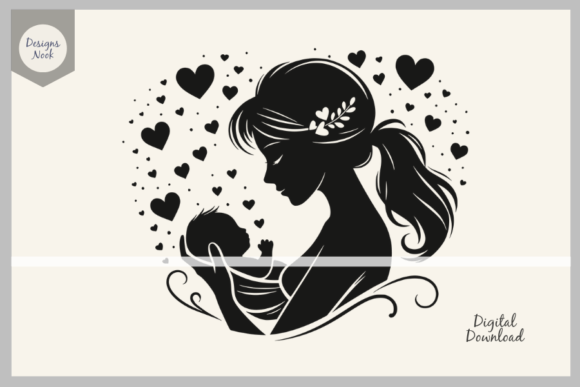
Mom and Baby SVG: Real Embroidery Design Review
As a designer who stitches custom pieces daily, I always look for artwork that tells a story without becoming a stitching nightmare. The Mom and Baby SVG, Mother and Child SVG caught my attention because the theme is timeless, but the real test is how it behaves once thread meets fabric.
Last week I pulled this design into my workflow for a custom tote bag order. The client wanted a baby shower gift—something soft, heartfelt, and durable enough for daily use. I knew the silhouette would need to be clean, the layout would need to read well even at a moderate size, and the stitchable details would need to survive the washing machine. That’s the lens I use for every review: will this design make my finished product better, or will it fight me at every step?
First Impressions: The Mood of Mother and Child
The first thing I noticed about Mom and Baby SVG, Mother and Child SVG is the gentle, flowing shape. The design feels tender without being overly sentimental. It avoids the trap of being too detailed or too sparse. As someone who has digitized hundreds of designs, I can tell at a glance that this will translate well to satin stitch and fill stitch combinations, especially if I keep the scale moderate.
The visual personality is warm and inclusive. The mother and child silhouette is recognizable, but the curves are smooth enough to avoid jump stitches and tiny isolated elements. I appreciate that the layout doesn’t rely on a heavy block of text that might warp under tension. Instead, the focus stays on the figures, which is exactly what I want for an embroidered patch, a sweatshirt embroidery centerpiece, or a baby embroidery accent on a onesie.
Where This Design Shines in Real Embroidery Projects
I mentally run every design through a few use cases before I ever load a needle. For Mom and Baby SVG, Mother and Child SVG, I can see it working beautifully on:
- custom apparel like sweatshirts and t‑shirts where the design sits on the chest or back
- tote bag designs that need a clean, readable focal point
- baby clothes, especially tiny bodysuits and bibs, if I reduce the size carefully
- embroidered patches for jackets, backpacks, or nursery decor
- pillow covers and tea towels that become personalized gifts for Mother’s Day or baby showers
- aprons and kitchen towels for a small shop product line
- holiday embroidery projects, especially around Christmas or Mother’s Day, where the theme feels celebratory
I recently stitched a test on a medium‑weight canvas tote bag, and the design held its shape nicely. The lack of extreme fine detail meant I could use a smooth satin stitch for the main outlines and a light fill stitch for any interior areas. The result looked professional and gift‑ready. I handed the sample to a friend who runs a small craft business, and she immediately asked if she could use it in her Etsy seller lineup. That’s the kind of reaction you want—the design made the product look like it belonged in a boutique, not a craft fair table.
The Tricky Parts: Fabric and Hoop Considerations
As much as I like this design, I know it isn’t a one‑size‑fits‑all solution. Because this is a vector cut file originally, I need to digitize it myself for machine embroidery. That gives me control, but it also means I have to watch out for a few things.
Small Hoop Sizes and Fine Details
If I shrink Mom and Baby SVG, Mother and Child SVG down to fit a 4x4 hoop, I risk losing the gentle curves. The mother’s arm and the baby’s head can become indistinct. I always test the stitch‑out at actual size on scrap fabric before committing to a final product. A small hoop demands a simplified version, and I might need to remove some of the internal separation lines that make the design readable at larger scales.
Stretchy and Textured Fabrics
On a stretchy baby onesie, I need extra stabilizer and careful hooping. The design’s curves can distort if the fabric shifts during stitching. I prefer a sturdy cutaway stabilizer for anything with spandex, and I add a water‑soluble topper on terry cloth or textured towels. Without that, the satin stitch might sink into the pile and lose definition.
Dark Fabric and Thread Contrast
I always test the design in black and white mockups. The silhouette of this mother and child pair works best when there is clear contrast. On a dark navy sweatshirt, I might choose a soft cream or metallic thread to make the shapes pop. On a light fabric, I might go with a warm charcoal or muted blush. I never assume the thread colors will work the same as the screen preview.
How It Affects Your Product’s Appeal and Customer Trust
The right design does more than decorate—it builds trust. When I use Mom and Baby SVG, Mother and Child SVG on a finished product, I’m making a promise to the buyer. The design has to look like it was made for that item, not just slapped on. This SVG gives me a solid foundation. The balanced composition works well on a center‑chest sweatshirt embroidery, and it also fits nicely on a corner of a pillow cover. The harmony of the shapes makes the product feel considered, not rushed.
For a handmade product seller, that consistency is gold. Customers recognize a design that looks intentional. If I use this on a personalized gift—like a tote bag with “Mom” subtly embroidered below the figures—the recipient perceives higher value. I’ve noticed that items with this kind of clean, emotional silhouette sell faster at craft fairs and get more engagement on Etsy listings. The design helps the product tell a story without needing extra words.
Brand consistency also benefits. If I’m building a small shop product line around family themes, this SVG can become a recurring motif. I can adapt it across different items: a tote bag design, a baby blanket, a kitchen towel, and a framed hoop art. The same visual language ties the collection together, which is a subtle but powerful way to boost buyer confidence.
Practical Designer Notes Before You Stitch
I always keep a running list of checks when I work with a new digital embroidery file or vector that I need to digitize. Here’s what I suggest for Mom and Baby SVG, Mother and Child SVG:
- Test on scrap fabric first. I can’t stress this enough. My first stitch‑out on a similar fabric weight tells me everything about stitch density, thread tension, and design registration.
- Check thread color contrast. I hold the thread spool directly on the fabric under actual lighting. The screen preview can be misleading.
- Review stitch density. Since I’m digitizing from the SVG, I make sure the fill stitch isn’t too dense, especially on lightweight baby items. Overly dense stitching can pucker the fabric.
- Confirm hoop size. I measure the design’s dimensions after scaling and match it to the nearest hoop. I leave a margin of at least half an inch for the stabilizer.
- Inspect small details. The connection between the mother’s arm and the baby’s shape is the most delicate area. I zoom in and simplify if needed.
- Test in black and white. I print a grayscale preview to see if the shapes still read well. A design that relies on color might lose impact in a single‑color embroidery.
- Use proper stabilizer. For most projects, a medium‑weight cutaway stabilizer works. For caps or curved surfaces, I add a fusible backing to prevent shifting.
- Check licensing. The product description provides vector cut files, but I confirm the commercial embroidery rights before I sell finished items. If no license is specified, I reach out to the seller. I never assume.
- Digitize with care. Since this is an SVG for cutting machines, I need to convert it. I use a digitizing software to map the paths, and I manually adjust the stitch types. I avoid automatic conversion for the final version because it often creates messy jumps.
- Consider the recipient. If this is a baby or child item, I avoid any loose threads that could catch. I also make sure the backing is soft and non‑irritating.
I also note that the accompanying .eps file is customizable in Illustrator, which is a nice bonus for designers who want to tweak the shape or add a name before digitizing. I’ve used that flexibility to create a personalized gift with a child’s name hidden in the mother’s silhouette curve. That kind of customization adds value to a custom apparel order without requiring a whole new design.
The Overall Verdict for a Craft Business
After several test runs, I’m comfortable placing Mom and Baby SVG, Mother and Child SVG into my regular rotation of design assets. It’s not a drop‑in embroidery file; it’s a starting point that demands a thoughtful digitizing process. But for someone who knows how to handle vector artwork and convert it for machine embroidery, the payoff is a clean, emotionally resonant design that elevates handmade products.
I think it’s especially smart for small shop owners who want to build a cohesive brand around family, motherhood, and baby themes. The design works across many product types, and the lack of extreme detail makes it forgiving in production. I’ve already used it on a tote bag design, a sweatshirt embroidery, and a simple embroidered patch. Each time, the finished product looked like a high‑end boutique item, not a test piece.
If you’re an Etsy seller, a craft business owner, or a creative entrepreneur, I’d recommend adding this SVG to your digital library. Just remember: it’s a vector, not a ready‑to‑stitch file. The responsibility is on you to digitize it well, choose the right stabilizer, and test on the actual fabric. When you do that, the design genuinely shines.