A Designer's Look at Baby Duck and Mom Papercut Embroidery
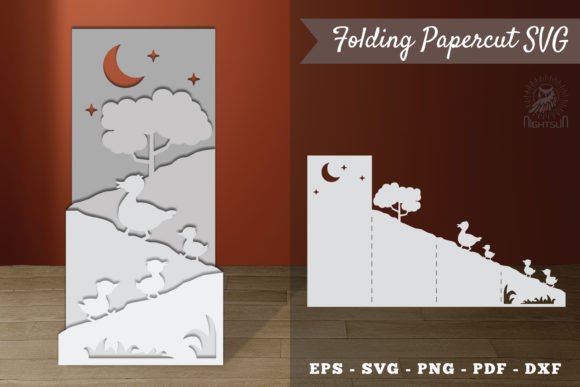
Every so often, a design crosses my desk that feels like an instant mood-maker. The Baby Duck and Mom Folding Papercut SVG is exactly that. Before I even think about loading the file, the silhouette itself tells a story: gentle, nurturing, quietly playful. It's not a loud, cartoonish graphic; it’s a thoughtful papercut-style illustration that evokes warmth and connection. That’s the first and most important impression for any embroidery project—the emotional space it creates before the needle even moves.
Where This Design Finds Its Perfect Home
As an embroidery designer, my mind immediately starts pairing a design like this with real projects. This isn't just a graphic; it's a potential centerpiece. The clean, flowing lines and the intimate subject matter make it a natural candidate for personalized gifts and boutique-quality items. I picture it beautifully stitched on a organic cotton tote bag for a new mom, or as a delicate accent on a linen pillow cover in a nursery. The softness of the theme translates perfectly to baby items—think a tiny, elegant patch on a heirloom blanket or a single-color rendition on a cozy sweatshirt.
For small business owners and Etsy sellers, this design offers tremendous versatility. Because it comes in multiple core file formats—SVG, AI, EPS, PNG, PDF, DXF—it’s adaptable. You can use it as a machine embroidery design, or as a clean graphic for printable mockups to showcase your finished product in your listings. That's a practical advantage for creative entrepreneurs building a cohesive brand around handmade, heartfelt products.
Visual Appeal and Customer Trust in the Stitched Result
When a design has this level of visual clarity, the stitched result builds customer trust. A crisp, well-defined embroidery file like this, when executed with proper stabilizer and thread choices, looks professional. It signals care. On a custom apparel item like a sweatshirt or a tea towel, the clean lines of the mother duck and her baby will hold up, creating a polished handmade presentation that feels giftable and special. For holiday gifts or wedding presents, this kind of embroidered detail adds a layer of thoughtful recognition that buyers appreciate.
The papercut style, with its implied layers and folds, is particularly interesting for embroidery. Depending on your machine settings, you could interpret those lines with a smooth satin stitch for a bold, modern look, or a running stitch for a more sketch-like, delicate feel. The design's layout, without overly dense detail, suggests it will stitch out cleanly without overwhelming smaller hoop sizes, making it suitable for items like caps or the curved surface of a hat, provided you test and adjust for the fabric's stretch.
Practical Considerations for Real-World Stitching
Confidence in a design comes from knowing its limits as well as its strengths. While the Baby Duck and Mom Folding Papercut SVG has a wonderfully open and legible shape, there are always considerations. For instance, on very textured fabrics or dark backgrounds, you'll need to plan your thread color contrast carefully. Those fine lines defining the "fold" in the papercut could lose clarity if the contrast isn't strong. Always test on a scrap of your target fabric first.
Similarly, for projects destined for frequent washing—like kitchen towels or baby clothes—you want to ensure your stitch density is appropriate for the fabric weight. A design with large fill stitch areas can be stiff on lightweight material; this design appears more line-based, which is a good sign for durability on lighter cottons. However, inspecting the small details in your embroidery file preview is crucial. Are the ducklings' features distinct enough at your intended size? Running a test in a black and white mockup can help you judge the clarity of the silhouette alone.
Another note for commercial embroidery and craft business use: the provided file formats are excellent for flexibility, but they don't include specific machine embroidery file formats like .PES or .DST. This means you, as the designer, will likely be converting the SVG or EPS into your machine's format. This is a common workflow for many of us, but it requires you to check stitch generation carefully in your software—reviewing corners and potential underlay settings to ensure the final embroidery file is as clean as the original graphic.
Turning a Graphic into a Professional Embroidered Product
The leap from a digital graphic to a finished product is where your expertise matters most. For an embroidery project using this design, think about the final context. If you're creating an embroidered patch, the high-quality PNG could be perfect for the product photo on your Etsy listing, while the vector files ensure the patch itself is sharp. For apparel decorators, using this on a curved cap requires attention to stabilizer and possibly simplifying very tiny elements. It’s a design that feels suited to a medium scale, where its gentle personality can shine without being cramped.
Ultimately, designs like the Baby Duck and Mom Folding Papercut SVG are valuable design assets. They support brand consistency for a small shop focusing on family, nature, or handmade nursery decor. They elevate a simple kitchen towel into a boutique product. They make a personalized gift feel uniquely crafted. My advice is to embrace its mood, but approach it with a practical eye. Test it. Check the licensing for your intended commercial use. Compare how it looks on light and dark backgrounds in your software. Then, let that quiet, charming story of mom and baby duck come to life in thread, on a project that deserves that kind of warmth.